Sentient Compassion – A Conversation with Malcolm-Jamal Warner
- Jan 12
- 9 min read
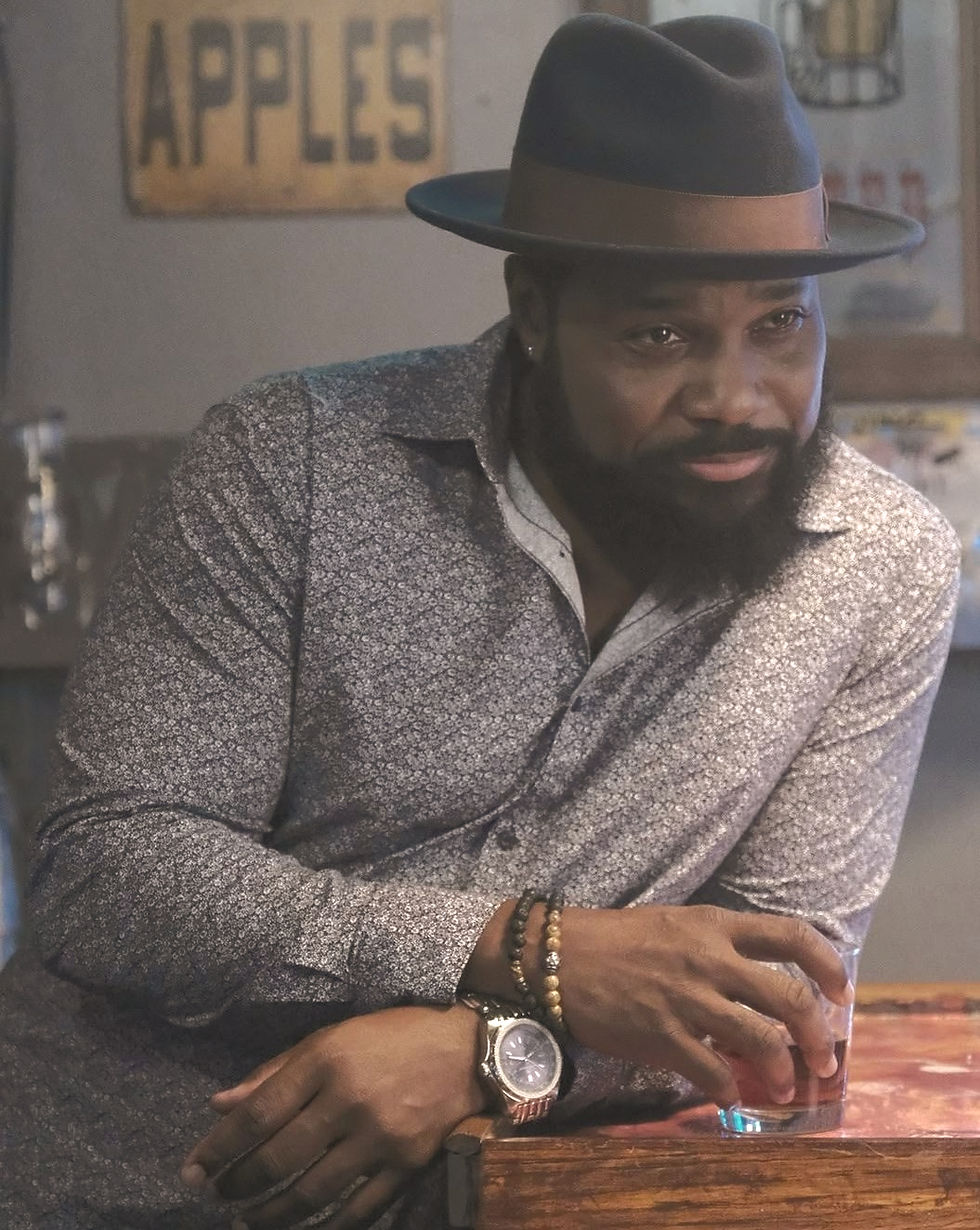
K: Hello…I think. Let me grab a line.
M: (chuckles) Grab a line?
K: Hone in.
M: Oh. That’s what that means. I didn’t think you needed to hone into anything. I thought you were that good. (winks and grins)
K: Ha! Thanks for that but, alas, no. I take a beat to pick up the energies…the vibes…the visions. I just have some stuff going on that, now that I’m with you, is fading into the background of life. All good.
M: I like it. I like it. How’s things, Miss. Kim?
K: Things be alright. Thanks for coming back. How’s things with you?
M: Things are good. Very good.
K: How’s the fam?
M: Fam is doing okay.
K: When your call went to voicemail the last couple of times…
M: (nods and laughs a little bit) You need an assistant.
K: Not quite. Maybe one day. However, I digress…I got this distinct feeling that you were…a little frustrated with the state of things in terms of…compassion.
M: Yes. Yes, I am a bit frustrated, and I think that the frustration comes from seeing how things are from this perspective and seeing how…easy love and compassion are and how easy they are to give out but it’s really tough for people sometimes. And I didn’t understand why it had to get so…or something had to happen in a “bad” (finger quote) or an extreme way for that compassion to be shown.
K: For sure.
M: And I questioned why…does there need to be a big event or why do people’s jaws need to be dropped when watching something…useless happen to someone to have that compassion?
K: Useless is a strong word.
M: The uselessness comes from the fact that a life…a few lives, now, have been taken uselessly…for what? A power trip or because they can. An external force gave power to a situation and created extremism in the form of a government agency. And compassion was shown after the fact. Not by the perpetrators but by the public. I find that fear is permitted first and then when fear is done, compassion comes through.
He’s talking about the ICE situation in the States where a mother was shot.
K: I honestly don’t know the details of the situation…more the headline, but my heart does go out to that situation. But even where I am, there is a lot of that misuse of power…because they hold some sort of status by the law or the government, they use that power in inappropriate ways.
M: Yes. I just…(rubs his chin and thinks) compassion is easy but yet, sometimes, it’s the hardest thing to act on.
K: I feel like, with compassion…it can be pretty segregated.
M: How so?
K: Like, it’s easier to hold compassion towards…I feel like race is still an issue…sexuality is still an issue…religion…country…all of that. It still feels pretty separated and compassion is easier within those same groups because there is a certain understanding of individuals that live in those compartments of humanity, together, and to have full compassion or understanding with anything or anyone outside of those parameters can be short lived but not impossible.
M: I see. Yeah…I see that. (nods) Humanity and compassion…but that’s only part of it. Because people…even people as a group…the compassion for environment or animals…because just like people with people, there are people that hold power over people, but people hold power over these things, nature and animals, and I think that sentient is something that could factor in more. What is sentient? Because what is sentient carries emotion no matter how small. Even the tiniest insect…feels in some way. It might not be in a way that people tend to humanize, but they do feel.
K: You’re showing me Ghandi…why?
M: I spoke with the man. I wanted to get a sense of…where I got it wrong and where he got it right. I feel like there are a lot of people that pass…die for lack of a better word, and want to speak with someone profound even if there are people that think…maybe he wasn’t the most peaceful man on the planet when he lived and I’m sure he wasn’t. But…he told me he came back as a flea.
K: A flea?
M: For a little bit.
K: I mean, they don’t live long.
M: Yes. (nods) but in that experience, he wanted to feel what a flea feels…it didn’t matter for how long. But he wanted that experience to round out his. And he said it took him by surprise about…something that is like a parasite…feels emotion…feels something and so it is sentient. Now…the umbrella of humanity is not where compassion lives. Compassion is with all of it, and it’s not segregated or put in columns or, even still, levels. It’s one. A good starting place would be to attempt to put oneself into the steps of another.
K: You didn’t say shoes.
M: That was on purpose because not all sentients wear shoes.
K: For sure.
M: I lived as a proud African American man. I held compassion for people. But I can honestly say that because of my pride, I held so much compassion for the African American…person. I feel like it cut me off a little bit from the rest of it.
K: Me too. Totally. I have my moments. Absolutely.
M: I believe that everyone does because we’re placed, at birth, in a column of society that we remain in and only step into other columns here and there. We get a taste of that, but we always come back to the column that we know or identify as. You know someone who is struggling with their identity.
K: I do.
M: The column of where they belong.
K: Yes.
M: But they belong in all columns, and it takes a lot for a person to consider the fact…the very plain fact that they are all of it. It’s the idea or the definition of humanity that places people in the columns according to this and that. And so, whichever one you place yourself in or that you are placed in…is sort of a measurement of compassion for another column.
K: Compassion for nature…
M: I feel it comes…again…after something extreme. Like rising water temperatures and a bunch of sharks or dolphin beach themselves…fish wash up on shore. For that instant…it’s news. Next week, we’re back to the day in and day out. The forest fires…the nature…the animals. It’s devastating when you see it happening live…but then that shock and the compassion for life…dissipates and it’s only those who are in the thick of rebuilding that continue the compassion for the sake of the rebuild.
K: I feel like there is this sort of pyramid thing with the columns you’re describing. Like…it’s almost like a pie chart graph or something. It’s very…permeable and casual depending on where the person is at, at any given moment.
M: It’s very…at the moment…in the moment. It is like that.
K: So then how do we learn to have compassion for all sentients when this is so ingrained within us? To live that 100% of the time…I feel like it would become frustrating and overwhelming.
M: As much as I would like to see it happen, it can’t be an overnight thing because humanity needs to re-learn aspects of what humanity really is before they can stretch themselves to be sentient and not exactly human.
K: Wow! That’s profound.
M: There are planets that are not…inhabited by “humans” (finger quote) or human-like. They are inhabited by sentient and there are rules and freedoms…well, they live very freely because once an existence gets to that level of life…rules, as people would consider them, aren’t needed.
K: Holy…we have a long way to go.
M: I would hazard a guess that it’s not long at all.
K: Do you feel sometimes like compassion turns into aggression only because humans do tend to get very upset when something, that is done, is deemed tragic and so they use their feelings of compassion to…protest the tragic. I mean…it’s turned into angry and violent scenarios throughout history.
M: It has. Very much so. Is compassion misplaced at that point? I don’t think so. I think it’s still the underlying reason for protest but at the same time…people are fed up with the uselessness of…I will call it the power trip. People are seeing through the power trip and that it’s needless and useless. There is a… necessity for rules and government right now in terms of humanity because humanity hasn’t gotten to that realm of sentient but people are seeing through…I would say people are seeing through the need for violence. But…at the same time…because people are seeing through it, those that believe violence and anger is appropriate…will hold onto that use of power very loyally. Until they can’t anymore.
K: Compassion and love on the scales of justice where anger and violence are on the other end of that. Both extreme.
M: Both trying to level out. People see the weight of the aggression and believe that is more powerful than the love and compassion, but I don’t see it that way. Using love and compassion hits heavier. Love and compassion just doesn’t make the six o’clock news very often. It’s usually shown at the end of the news broadcast as filler until the news anchors can sign off.
K: I feel like there needs to be a station where it’s only good news stories and those stories that are filled with love and compassion that make people choke up with emotion a bit.
M: The choke up is because the truth of that and the power of that hits the heart and it can be overwhelming for people to witness those stories when they aren’t used to them. It’s also because hope…hope can be an overwhelming state of being when you don’t feel hopeful but then get a sense of the glimmer…the shiny object on a beach that turns out to be a bit of gold or a diamond or something.
K: Yeah. I get it. And I get the frustration. I mean, I’ve felt it from my group since I started channeling them. And I really feel like that’s why they continue to be boots on the ground. I do get irritated when they talk about the ease and simplicity of compassion, love, forgiveness because I feel like spirits forget what it’s like to be wounded by another whether that’s emotional, mental, physical…spiritual.
M: Yes. I agree. (nods) We can forget because when we have that review of life and we walk in the footprints of others…we understand where we could have shown more love, compassion, forgiveness…peace. But that’s why. It’s because we were shown, and we were shown…how easy it is…how easy it could have been. And I guess that’s why you have a few teachers at your table now. Who want to explain or offer…maybe that little bit more.
K: For sure. Because, honestly, we can see all the posts on Facebook or Instagram that read…pretty much what we’ve been talking about here but is it really practiced?
M: The practiced is what people take in that reminds them of their power. Power is looked at as something to action but there is so much power in allowing and holding a certain…sacred space for compassion towards the sentient…not only human. For all the columns. Holding space for all the columns.
K: (smiles) Absolutely. I feel that deeply. Although, I don’t practice it all the time myself. I can get triggered and pulled out of my center quite a bit.
M: Everyone can, Miss. Kim. Everyone can. But to recognize that…is part of the process.
K: Do you think everyone recognizes it to some extent?
M: (nods) I do but what’s the action when the realization hits? That’s the choice of the individual. I’ll leave it at that.
K: Yes. Totally. I’ve been having those conversations with actual physical people these days.
M: (laughs) I will try not to take offence that you have actual conversations with actual physical people too.
K: (laughing) I mean…I’m still here.
M: Yes, you are. Yes, you most certainly are. I feel good. (bounces his shoulders up and down) Thanks for the therapy.
K: Ha! (rolling my eyes) As if. Just a friendly ear.
M: Works just the same. Thank you. I won’t leave anymore messages on your phone…for a while anyway.
K: I don’t see any more calls coming in. We’ll see.
M: The line is being monitored…I was told.
K: You were told, huh? I believe it.
M: Apparently there is a risk of overwhelm.
K: (laughing hard) Dear! God!
M: Don’t shoot the messenger.
K: The messenger will be shown mercy.
M: Thank you.
K: I must eat something. Be off with you. I am done. (joking)
M: As you wish. (bows a little) See you later.
K: Bye. I love you.
M: (grins and nods) I love you, too. Bye.
K: Bye.
Slowly fades away.

